

Graphite shafts today come in various colors, but they’re not there for style. Usually, they’re code for the ball flight the shaft is built to deliver.
Black means low. Red means high. Blue means in between.
The code is unwritten but widely accepted, and it is shorthand to describe a golf shaft kick point.
Most golfers have never heard of their kick point, let alone know their own. Shafts are already an overlooked component, and kick point is perhaps the most overlooked part of the shaft. The upside? If you didn’t choose your kick point intentionally, that’s one more lever you can pull to optimize your ball flight.
Here’s everything you need to know about kick point, including how high kick point vs low kick point shafts compare, to help you match the right shaft to your swing.
Table of Contents
- What Golf Shaft Kick Point Actually Is
- High Golf Shaft Kick Point
- Mid Golf Shaft Kick Point
- Low Golf Shaft Kick Point
- How to Know Which You Need
- Shop by Golf Shaft Kick Point
What Golf Shaft Kick Point Actually Is
If a shaft’s flex is how much it bends, kick point is where it bends. That’s why it’s also sometimes called its bend point.
A shaft with a low kick point bends closer to the tip, and a shaft with a higher kick point bends closer to the butt of the shaft.
The shaft’s kick point directly influences the ball’s trajectory, and those two things work in opposite directions. A low golf shaft kick point promotes a higher trajectory, and a higher kick point promotes a lower trajectory.
High Golf Shaft Kick Point
If you’re looking for a shaft that promotes lower launch and less spin, then a shaft with a high kick point is a good fit.
Shaft specs rarely state the kick point directly. You’re more likely to see it translated through the color-code outlined above (black is usually low launch and spin), or simply described as a low-spin, low-launch profile.
A high kick point shaft bends closer to the grip of the club to promote a penetrating trajectory. Because faster swing speeds tend to produce more spin and higher launch, a high kick point shaft is typically the best fit for high swing speed players. That profile helps them keep spin in the optimal window, around 1800-2300 RPM of spin with a driver, to maximize distance. But you don’t have to have a tour-level swing speed to play a high kick point shaft. Anybody looking to lower their launch and spin could enjoy the benefits.
High Kick Point
- Typically a black shaft
- Promotes lower launch and spin
- Best for high swing speed players
- Keeps spin around 1800–2300 RPM to maximize distance
A few of the most popular high kick point shafts today include the Project X HZRDUS Black, Project X HZRDUS Black Gen4, and Fujikura Ventus Black TR.
HZRDUS Black: The HZRDUS Black driver shaft combines low launch and spin with low torque to help faster swing speed players keep the face stable. That profile promotes a flat trajectory, tight dispersion and long distances from a well-fit swing speed.
HZRDUS Black Gen4 Fairway Wood: The Gen4 HZRDUS Black keeps the original’s low-launch and low-spin profile, but replaces the boardy feel with a smoother feel at impact. When used in a fairway wood, it’s available in both 70g and 80g options, and promotes the tight dispersion and predictable ball flight that HZRDUS Black is known for.
Ventus Black TR: For players with an aggressive transition or a fast swing speed, or both, Ventus Black TR can be a great fit. In addition to the low ball flight that any high kick point shaft promotes, Ventus Black TR favors tight dispersion and consistent strikes.
You should probably avoid a high golf shaft kick point, low-launch and low-spin shaft if you have a slower swing speed and naturally hit a low ball that doesn’t carry much spin. If that’s you, and you’re using a high kick point shaft, switching to one that fits your swing better can add distance without changing your swing.
Next Round Shaft Guide
Shop High Kick Point Shafts


Mid Golf Shaft Kick Point
High and low kick point shafts correct tendencies. The mid kick point shaft is the neutral middle ground. It produces a mid-launch and mid-spin profile that suits the broadest range of swing speeds and tempos.
Players with moderate swing speeds, and those who don’t struggle with an excess or deficiency in either launch or spin don’t need a shaft designed to correct either of those, and would be best served starting their kick point test in the middle. Whereas a high kick point shaft is designed to offset the extra spin and launch that particularly fast swing speeds create, a mid kick point shaft is made to create optimal launch and spin from speeds that are at neither the top or bottom end of the spectrum.
If you don’t know if your launch or spin are far enough from optimal to be costing you distance, a quick session on a launch monitor can help. With driver, spin somewhere in the 2000s of RPM, launch in the low double-digits (11-15 degrees) and an apex somewhere around 100 feet are solid ballpark numbers to look for. If your swing speed is a little slower, 85 MPH or below, then a little higher launch and more spin will help optimize distance.
Anything drastically outside of those launch, spin, and apex ranges could signal that searching for a correction via shaft selection is a good idea. If you’re in or close to those ranges, then a neutral shaft, or the profile you’re already using, is a good fit.
Mid Kick Point
- Typically a blue shaft
- Promotes mid launch and mid spin
- Best for moderate swing speeds and the broadest range of players
- Target: launch 11–15°, spin in the low 2000s RPM, ~100' apex
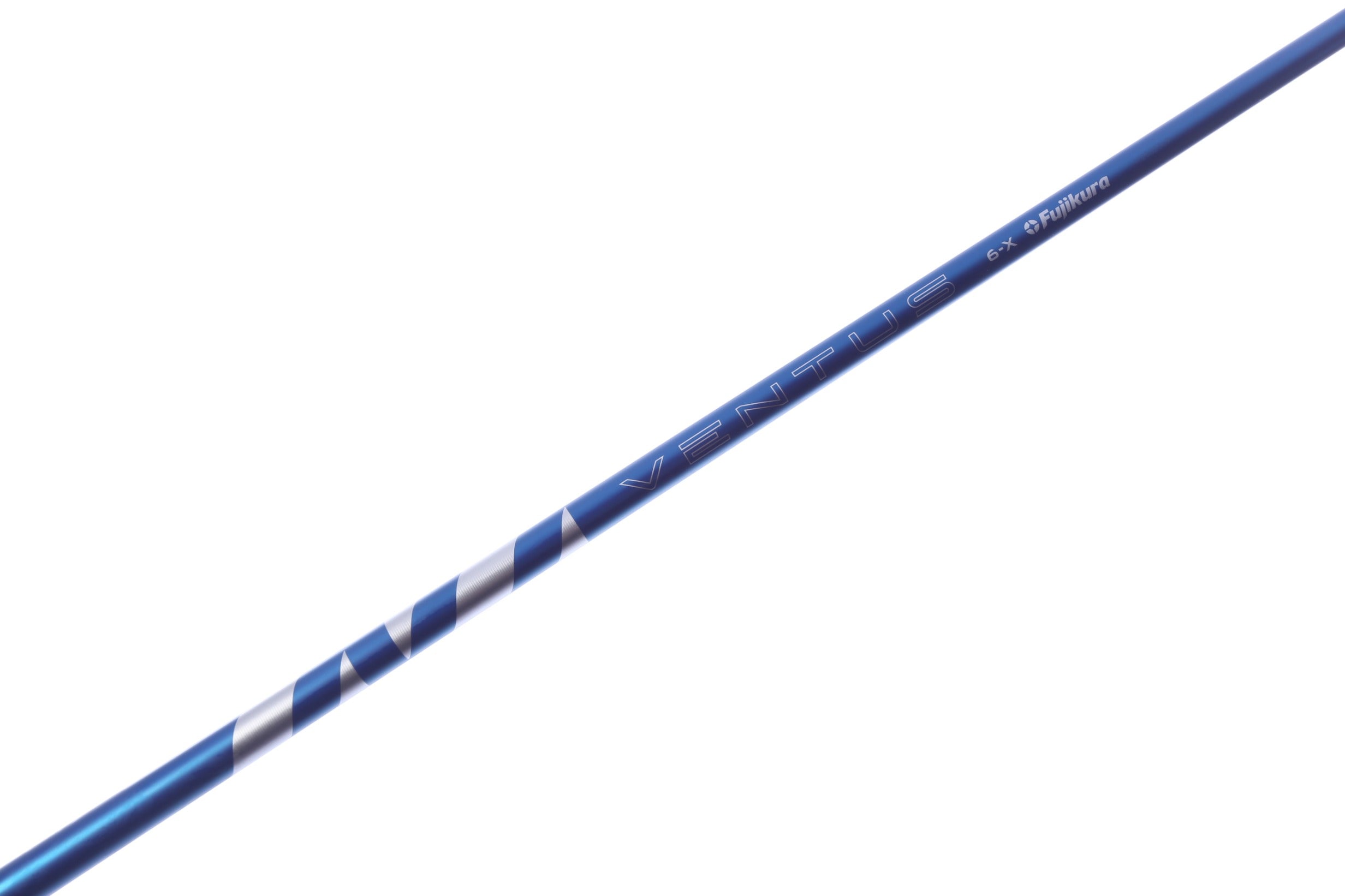
A few of the top mid kick point options to check first include Fujikura Ventus Blue TR, Project X HZRDUS Smoke Blue RDX, and Tour AD DI.
Ventus Blue TR: The Ventus Blue TR driver shaft is built for a wide range of players, favoring a playable mid launch and mid-to-low spin profile. The tip section is built to resist twisting on off-center strikes, retaining more ball speed and creating more predictable distances on those mishits.
HZRDUS Smoke Blue RDX: For players seeking and easy-to-load shaft, regardless of stiffness, HZRDUS Smoke Blue offers a lively mid section built for a penetrating flight and tight dispersion. The stiffer options (stiff and above) play low-launch and low spin, though not as low as the Black, given the same swing.
Tour AD DI: The Tour AD DI doesn’t follow the mid kick point script to a tee. Instead, it couples higher launch with low spin to produce maximum carry distance with a controlled flight. The soft-feeling mid-section and firmer tip creates a kick feeling through impact, and that tip is designed to keep dispersion tight.
While mid kick point shafts are made to suit the meat of the curve, they aren’t for everybody. If your ball flight or spin are far enough from optimal in either direction, choosing a high or low kick point shaft could return the most benefit.
Next Round Shaft Guide
Shop Mid Kick Point Shafts


Low Golf Shaft Kick Point
A shaft with a low kick point favors a higher ball flight with more spin. This can help players with slower swing speeds launch the ball easily and create optimal spin to maximize distance, or help players who naturally create a low ball flight and could benefit from more height.
Low Kick Point
- Typically a red shaft
- Promotes higher launch and more spin
- Best for slower swing speed players
- Keep spin at or below ~3000 RPM (under 85 mph) or ~2700 RPM (85+ mph)
Some popular low kick point shafts include Fujikura Ventus Red, Project X Cypher, and Ping ALTA CB Red.
Ventus Red: If higher launch can translate to more carry distance, Ventus Red is up for the job. It has a smooth-loading feel to give players seeking higher trajectory that extra height without swinging harder. Meanwhile, it’s built to reduce face-twisting at impact on mishits to keep dispersion in check.
Project X Cypher: For players looking to make the most of a moderate swing speed, Project X Cypher can be a great option. With a lightweight build, it helps boost speed while keeping the head stable through impact.
ALTA CB Red Hybrid: Unlike a driver, where low launch and low spin can lead to more distance (to a certain point), you’re just as likely (if not more) to play a hybrid into a green than off the tee. That means more launch and spin can help the cause. The ALTA CB Red is built for a smooth, dampened feel and a stable, consistent trajectory, making it a fit for golfers seeking repeatable contact from a variety of lies.
Because a low kick point shaft creates more spin than mid and high kick point alternatives, it’s smart to monitor your spin numbers if you use a low kick point shaft to ensure your spin profile is helping your game, not working against it. If your swing speed is under 85 MPH, keeping spin at or just below 3000 RPMs is a good starting point. If your swing speed is faster, then 2700 RPMs is a better benchmark. If your spin is significantly higher, then a lower-spin shaft could help.


How to Know Which You Need
The best way to determine which shaft profile will help your game the most is to monitor your ball flight. A launch monitor is the best tool for the job because you can see launch angle, spin rate, and peak height, all of which clue you in as to whether your shaft profile is a good fit, or a different option would work better.
If you don’t have a launch monitor, you can pay close attention to ball flight at the driving range and gauge whether the ball is ballooning and costing you distance, flying too flat and costing distance, or flying with an optimal trajectory, but that’s less precise and you won’t have the benefit of evaluating spin numbers.
Here are the optimal driver launch and spin numbers to look for based on your swing speed.
Next Round Shaft Guide
Optimal Driver Launch & Spin by Swing Speed
A launch monitor is the most precise way to check these numbers. No monitor? Watch for ballooning or too-flat flight at the range as a rougher gauge.
Using a shaft with the optimal kick point is a good way to bring your ball flight closer to the optimal range for your swing speed, which will result in more distance, but it’s not the only tweak you can make. Most modern drivers offer adjustability that can influence your launch and spin profile as well. If you’re dialing in your launch on a simulator or launch monitor, it may also be worth adjusting the settings of your driver to see if that can deliver the result you’re looking for.
Shop by Golf Shaft Kick Point
To find a shaft with the right kick point for your swing, browse shafts by kick point profile at Next Round Golf.
Next Round Shaft Guide
Shop by Golf Shaft Kick Point
High Kick Point
Mid Kick Point
Low Kick Point


