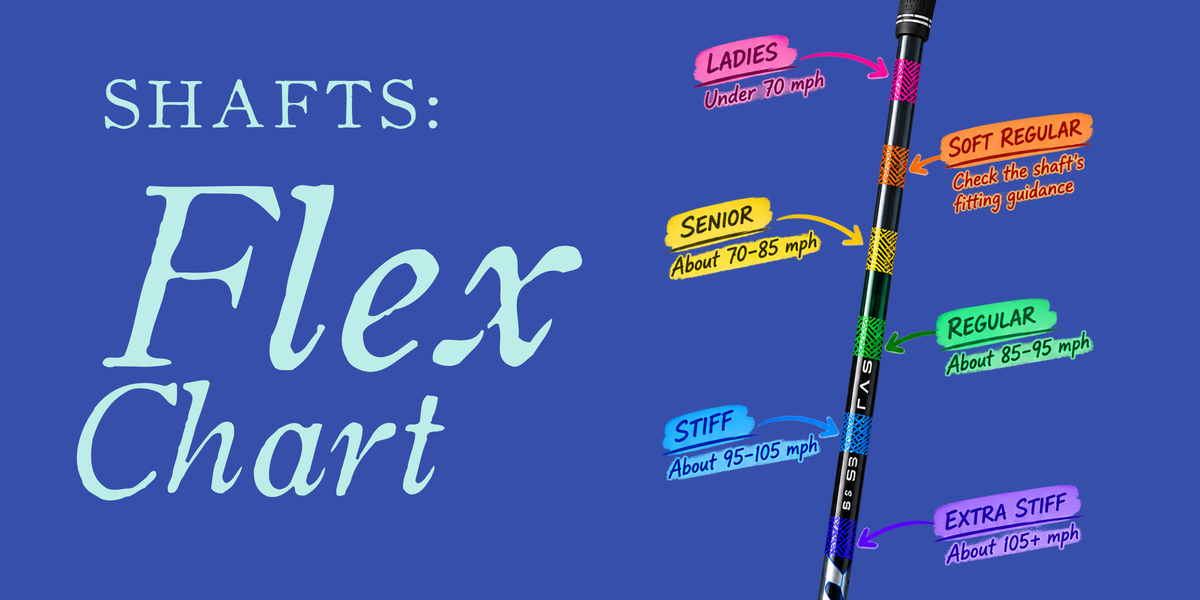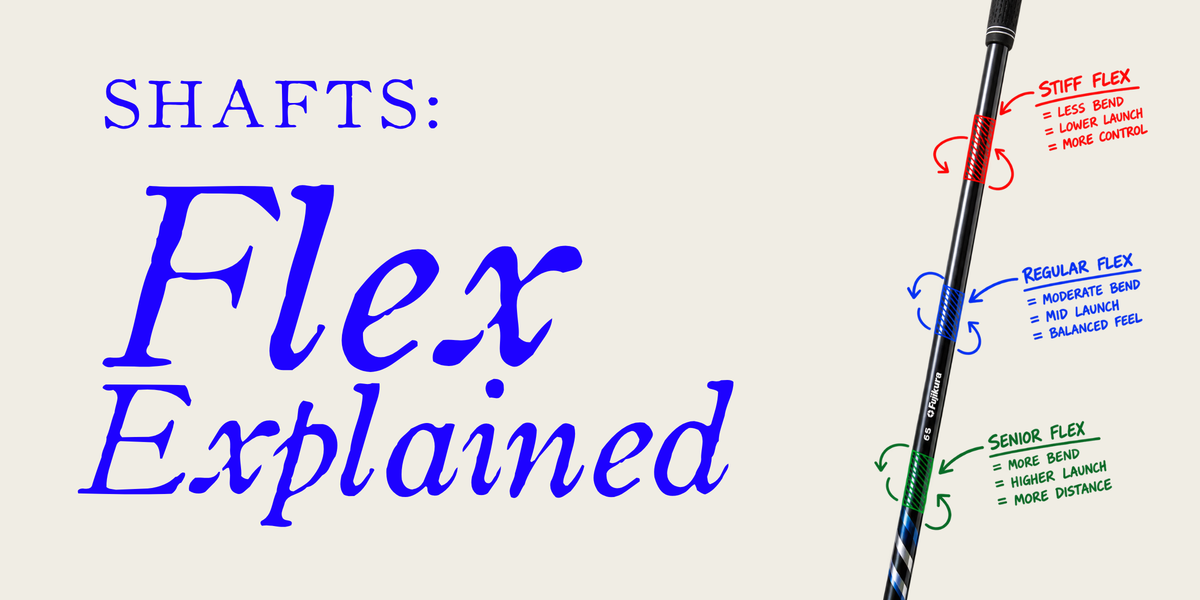

Most off the rack drivers carry one of three flexes, R - regular, S - stiff, X - extra stiff. Problem is (and as mentioned in other articles of mine), there's no industry standard for what these mean.
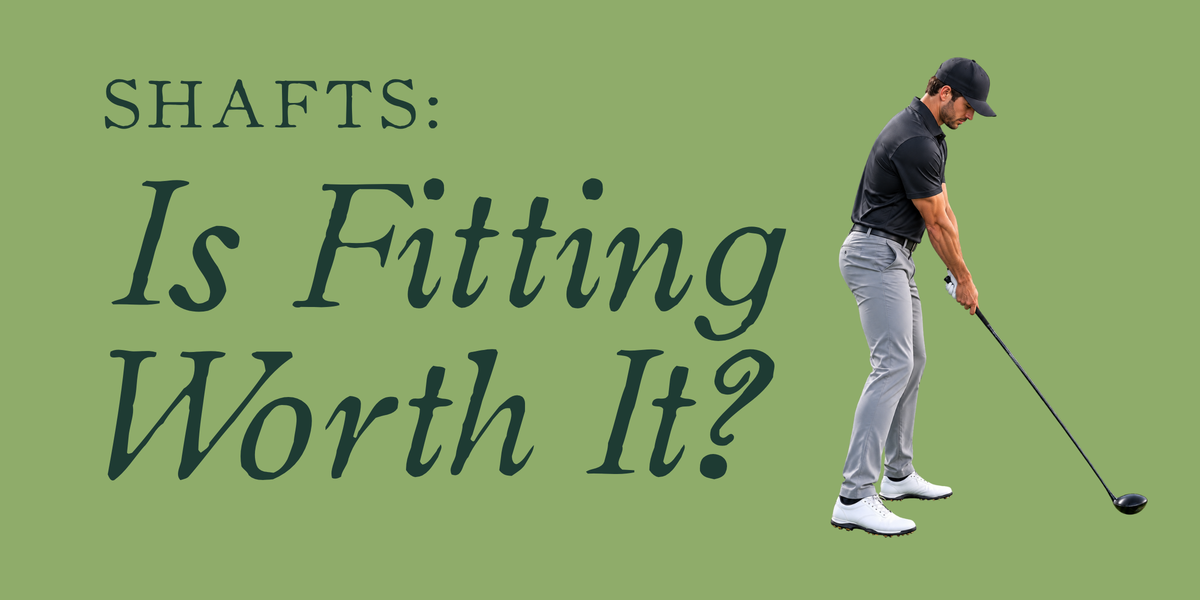
A golf shaft fitting is how you replace those inconsistent labels with numbers pulled from your own swing, so you get a shaft tailored to you.
TLDR: It's worth booking if you have a repeatable swing and a consistent miss or miss pattern. .
At the big fitting chains, a standalone driver fitting runs about $100 to $175 (less if a fitter is running a purchase-day promo), and a full-bag session runs up to $475.
The rest of this article walks through who should book one, what happens in the bay, and what to do with the spec sheet afterward, including buying the exact shaft pre-owned instead of at full retail.
Table of Contents
- What a Golf Shaft Fitting Actually Is
- Is a Golf Shaft Fitting Worth It?
- What a Golf Shaft Fitting Costs
- What to Bring and How to Show Up
- What the Fitter Actually Measures
- What Happens After: Buying the Shaft You Were Fit For
- The Decision
What a Golf Shaft Fitting Actually Is
A shaft fitting is narrower than a full club fitting.
A full fitting can include clubhead, loft, lie angle, grip size and shaft together. A shaft fitting isolates one variable (flex, weight, torque, bend profile) that turns a generic head into a club that matches your swing.
You bring your current setup, hit real shots on a launch monitor, and leave with your specs.
Kris McCormack, VP of Tour and Education at True Spec Golf, put it bluntly to Golf.com: one company's "Stiff" can be another company's "X," and there's no regulation on what gets labeled what. Two drivers both marked "S" can behave nothing alike.
That's not a knock on any one brand. It's just not a system anyone is required to follow, which is why a letter on a shaft may tell you less than you'd assume.
If you're buying without a fitting, for irons especially, the flex chart in my beginner irons guide is a reasonable starting point. It's general guidance based on swing speed ranges and beats picking blind.
Is a Golf Shaft Fitting Worth It?
Quick Recap
Book It If / Wait If
Book It If
- Your misses go one direction, not everywhere
- Your tempo doesn't suit the stock shaft
- You keep clubs for years, not seasons
Wait If
- Your swing isn't repeatable yet
- You're mid swing-change
- You're a true beginner
I say “yes” if you’ve got a repeatable swing, want to stop guessing if you’re in the correct shaft, need to correct a specific shot pattern, etc. But "most golfers" isn't the same as "you, right now." Use these two buckets honestly.
Book it if:
-
You make contact consistently, and your misses tend to go one direction rather than everywhere. A fitting is built to narrow down a specific pattern, not fix inconsistent strikes.
-
Your swing speed or tempo doesn't suit the shaft that came in the club. A shaft that's too stiff for you tends to fly low and push shots right (for a right-hander); one that's too soft tends to fly high and scatter misses in every direction.
-
You keep clubs for years rather than upgrading every season. Spread a fitting fee across years of play instead of one season and the math gets easy. That's the same logic behind my mid-handicap driver picks: the right shaft is worth chasing when you're not replacing it next year anyway.
Wait if:
-
Your swing isn't repeatable yet. If today's swing and tomorrow's swing look nothing alike, there's nothing stable for a fitter to fit. But if your swing feels the same and your misses still go everywhere, the shaft itself may be the mismatch, and a fitting is how you find out.
-
You're mid-swing-change with a lesson or drill you're actively working on. Get fit after the change settles, not before.
-
You're a true beginner. Skip the full shaft fitting until your swing stabilizes. For now, picking a driver shaft as a beginner without a fitting is fine, and a static fitting for length and lie is worth considering only if you're notably tall or short.
To recap: worth it for a repeatable swing with a real pattern to fix, not yet for someone still working on solid contact..
What a Golf Shaft Fitting Costs
Prices vary more than you'd expect for what looks like the same service.
Here's what four named fitters actually publish.
Golf Shaft Fitting
What a Fitting Actually Costs
| Fitter | Driver Fitting | Full Bag | Notes |
|---|---|---|---|
| PGA TOUR Superstore | $99.99 (75 min) |
$299.99 (3 hrs) |
Also lists iron fitting at $99.99, and wood/hybrid or wedge fittings at $59.99 each (45 min) |
| True Spec Golf | $175 | $375–$475 | Full-bag price depends on whether a putter fitting is included |
| GOLFTEC |
"Starts at $95" or $150 as a line item |
Not published | GOLFTEC's own pages disagree, so both figures are shown rather than a guess at which one you'll actually be charged |
| Club Champion | $50 w/ same-day purchase |
$100 w/ same-day purchase |
No standalone price is published; these are promotional figures tied to buying gear on the spot |
Prices as published by each fitter and subject to change. Weigh the fee against what you're buying — a new driver with the wrong shaft in it is a full-price club you're not fully using.
Weigh that fee against what you're actually buying. A brand-new driver with the wrong shaft in it is a full-price club you're not fully using. The fitting fee is small next to what the head itself costs.
What to Bring and How to Show Up
None of this is a vendor requirement, just what makes a session useful:
-
Your current driver (or irons). It's the baseline the fitter compares everything against.
-
The ball you actually play. Spin and launch numbers shift with the ball.
-
Golf shoes and a glove, if you normally wear them. You want your regular setup, not a stripped-down version of it.
Show up ready to play, so to speak. You want, nay need, to get fit for how you normally hit the ball.
I did NOT do this for my last driver fitting - mentioned below - and I wasted about $600 on a driver that sat in my closet for 2 years before I sold it for less than half of what I paid. Don’t be me.
Arrive a little early. Get warmed up. Take it seriously.
What the Fitter Actually Measures
The launch monitor is doing the real work here.
PGA TOUR Superstore's fitting studio, for example, uses TrackMan, which tracks club data and ball data on every swing: club speed, ball speed, launch angle, spin rate, carry distance, and dispersion (how far your misses spread left and right).
One number worth knowing: smash factor, which is just ball speed divided by club speed, a rough gauge of how efficiently you're transferring energy into the ball.
Golf Shaft Fitting
4 Variables a Fitter Can Change
Flex
How much the shaft bends through your swing. A fitter looks at speed, tempo, and release — not just a swing-speed chart.
Weight
The lever between control and distance. Heavier and stiffer trends toward control; lighter and more flexible trends toward distance.
Torque
The shaft's resistance to twisting through impact — one more number on the spec sheet alongside flex, weight, and bend profile.
Bend Profile
Also called kick point. A modest but real effect on trajectory — lower trends higher flight, higher trends lower flight.
The general pattern: a too-stiff shaft tends to push misses to the right for a right-handed golfer, while a too-flexible shaft tends to scatter misses in every direction.
Once the data narrows things down to a handful of shafts performing about the same, a good fitting ends with a feel step: you hit each finalist and pick the one that feels best to you, since two shafts that measure identically can still feel different in your hands.
A couple of years back I got fitted at PGA TOUR Superstore. In the bay, the fitted shaft and the movable sole weight on the Titleist TSR3 had my drives finding the fairway more consistently than anything else I hit that day.
That same TSR3 was close to unhittable for me outside the hitting bay. As I stated above - you can’t be mid swing change and expect an accurate fitting.
Wes, who tests with me and is a former club fitter, had his own fitted X-stiff shaft for the TaylorMade Qi10 in my Cobra Darkspeed X vs. TaylorMade Qi10 comparison, but played a borrowed stiff shaft in the Cobra. You can see there what a real fitted spec looks like next to a borrowed one.
What Happens After: Buying the Shaft You Were Fit For
You leave knowing the exact shaft you were fit into: brand, model, flex, weight, and length.
You don't have to buy it from the fitter. You can shop that same shaft anywhere that sells it, including pre-owned.
Many pre-owned shafts are "pulls": removed from a used clubhead, typically with localized heat applied to the hosel or ferrule rather than the shaft itself, then reinstalled in a new head. That's how component sellers describe the general process. Tip condition is what determines whether a pulled shaft is worth trusting, and a reputable seller rejects shafts with a questionable tip.
One thing to check yourself: many pre-owned driver and fairway shafts are listed with an adapter already attached for a specific head brand, so confirm the adapter on any shaft you're buying actually matches your own driver's head before you order.
Next Round Golf, which sells pre-owned clubs and components and has a dedicated shafts collection, grades condition in four tiers:
Shop by Condition
Find Your Grade
If it doesn't match what you were fit for, you have 30 days from delivery for a refund; after that, it's store credit only.
The Decision
A driver fitting at the big fitting chains runs about $100 to $175, well spent before you spend real money on the shaft itself.
Get fit, get the spec, then decide where to buy: from the fitter, or pre-owned once you know exactly what you're looking for.
That's what makes a golf shaft fitting worth it.
Browse the full shaft inventory at Next Round Golf once you've had your golf shaft fitting.