The sand wedge covers a lot of ground beyond a bunker. Yes, it’s great when you get in a pesky sand hazard, but short-to-mid approach shots, greenside chips, and thick rough can all benefit from a little sand wedge action. There’s a reason it’s one of the most used wedges, if not one of the most used clubs.
But choosing a “sand wedge” for the first time requires a bit of homework. But when it comes to picking a wedge, you need to do your homework. Lofts range from 54° to 58° (we consider 60° a lob wedge), bounce can change how the club plays more than you’d think, and the right one for you depends on the rest of your bag. Here’s everything you need to know to pick the right sand wedge loft and find a great one at an affordable, pre-owned price.
Table of Contents
What is a sand wedge?
A sand wedge is a high-lofted wedge that sits between your gap and lob wedge. Its name covers a big portion of its job—it’s made to get you out of greenside bunkers. With a wide sole and extra bounce, it helps you glide through the sand instead of digging in.
But you’re wrong if you think it’s a one-trick club. Most golfers use their sand wedge for pitches, chips, flop shots, shots from thick rough, and full swings from short range. That versatility is why it’s important to pick the right sand wedge for your bag.
What loft is a sand wedge?
Most sand wedges have between 54° and 58° of loft. The most common sand wedge degree is 56° (and it’s also the most-played loft on tour).
| Wedge | Typical loft |
|---|---|
| Pitching wedge | 44°–48° |
| Gap wedge | 50°–52° |
| Sand wedge | 54°–58° |
| Lob wedge | 58°–62° |
54°, 56° or 58°: which sand wedge degree is right for you?
To pick a good sand wedge, you need to know the loft of your other wedges. A fitter typically recommends 4° to 6° of loft between each wedge, so your distances stay evenly spaced. Start with your pitching wedge loft and work up from there:
| If your gap wedge is… | Try a sand wedge at… | Then a lob wedge at… |
|---|---|---|
| 50° | 54° | 58° |
| 52° | 56° | 60° |
| No gap wedge | 54° (to shrink the gap from your PW) | 58° or 60° |
What about sand wedge bounce?
Bounce is another spec you’ll see when you’re browsing sand wedge options. Bounce is the angle between the leading edge and the lowest point of the sole, and influences how the club interacts with the ground. Look at the second number stamped on most wedges to determine bounce (e.g. a "56.10" is 56° of loft and 10° of bounce).
How to choose your bounce:
- Low bounce (4°–7°): Best for firm turf, firm or thin sand, and players with a shallow swing who like to open the face.
- Mid bounce (8°–11°): The all-around choice for most golfers and most courses.
- High bounce (12°+): Best for soft, fluffy sand, lush turf, and players with a steep swing who take big divots. Also the most forgiving option out of bunkers.
Still not sure? A 56° with mid-to-high bounce is a safe place to start.
When should you use a sand wedge?
Greenside bunker shots
This is where the sand wedge shines. Open the face slightly, aim to hit the sand an inch or two behind the ball, and let the bounce do the work to get the ball out of the bunker.
Pitches and chips around the green
This is a go-to club when you need the ball to fly higher and stop faster than a pitching wedge. If you’re shooting an over-the-bunker shot or aiming for a tight pin, consider pulling out the sand wedge.
Full and partial shots from 60–100 yards
Inside your gap wedge distance, a full or three-quarter sand wedge gives you a high, soft approach that holds the green.
Thick rough
The extra loft and bounce help the club get through heavy grass and pop the ball up, where a lower-lofted club would get tangled.
How far should you hit a sand wedge?
Sand wedge distance depends mostly on your swing speed and the loft you play. Here’s what a full-swing sand wedge typically carries by handicap.
| Golfer | Average sand wedge distance |
|---|---|
| Beginner / high handicap (20+) | 60–80 yards |
| Mid handicap (10–19) | 75–95 yards |
| Low handicap (0–9) | 90–105 yards |
| Tour pro | 100–120 yards |
To find your own number, hit 10 full sand wedges on the range or a launch monitor. Toss out the longest and shortest, then average the rest. That’s your stock yardage. From there, learn a half and three-quarter swing so you have three distances with one club.
And remember: with a sand wedge, distance control matters a lot more than max distance.
Our favorite sand wedges
Titleist Vokey SM10, SM9 & SM8 (Tour Chrome)
Vokey is the most-played wedge on tour for a reason. All three generations come in a wide range of sand wedge lofts and grinds, including the high-bounce K grind, which is one of the most forgiving bunker options you can buy. The SM10 is the most refined, while the SM8 and SM9 give you the same tour-proven design at a lower pre-owned price. Not sure which generation to get? See our Vokey SM10 vs. SM9 vs. SM8 comparison.

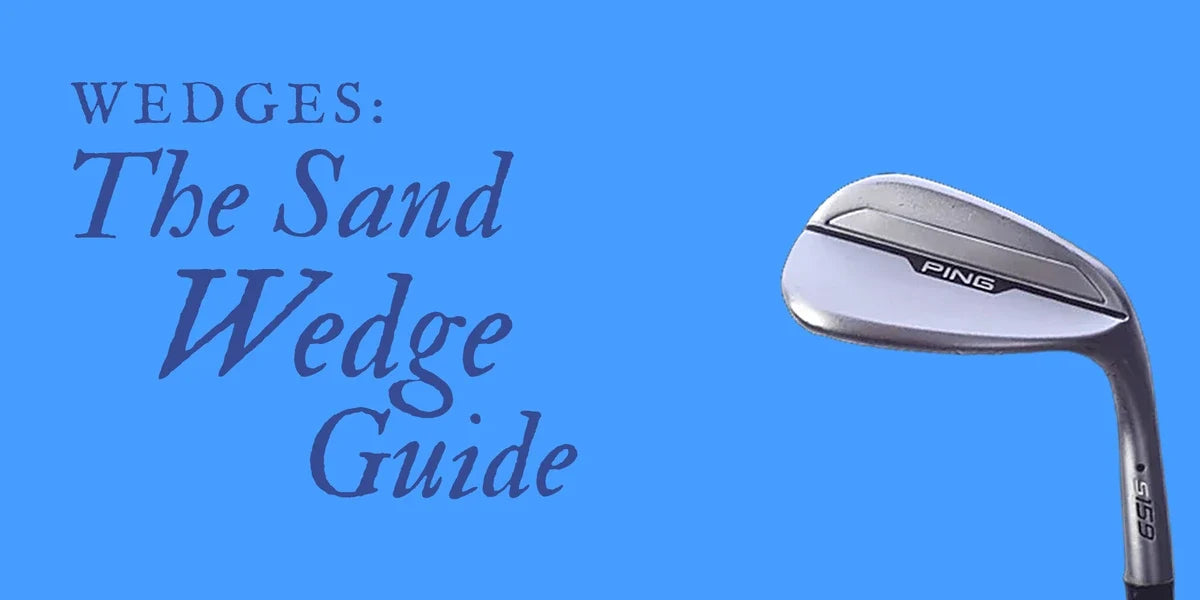
Ping s159
Ping’s s159 comes in more combinations of loft and sole shape than most wedges, so it’s easy to find one that fits your swing. If bunkers give you trouble, the E grind is the one to look at. It’s based on Ping’s classic Eye2 wedge, which golfers have used to get out of sand for decades. The chrome finish also pushes water off the face, so the ball still spins and stops even when the grass is wet.

Callaway JAWS MD5
The JAWS MD5 was designed with one goal: more spin. Extra-sharp grooves on the face grip the ball, so it stops faster when it lands on the green. The S grind is a good middle-of-the-road choice that works from the fairway, the rough, or the sand.

The bottom line
The sand wedge is one of the most versatile clubs in your bag. For most golfers, a 56° with mid-to-high bounce is the right place to start, but the best sand wedge loft is the one that fits evenly between your gap wedge and lob wedge. Match the bounce to your swing and your course, learn your distances, and you’ll have a club you can trust from the bunker, the rough, and everywhere inside 100 yards.
Sand wedge FAQs
What degree is a sand wedge?
A sand wedge is usually 54°, 56°, or 58°. The 56° is the most common sand wedge degree.
Is a 56° or 58° better for a sand wedge?
It depends on your other wedges. If you carry a 52° gap wedge, a 56° keeps your gaps even. If you don’t carry a lob wedge, a 58° can do double duty around the greens. Most golfers are best served by a 56°.
How much bounce should a sand wedge have?
Most golfers do best with 10° to 14° of bounce on their sand wedge, especially if they play soft sand or have a steeper swing. Firm courses and shallow swings call for less.
Can you chip with a sand wedge?
Yes. A sand wedge is great for chips that need to carry over something and stop quickly. For longer chips with plenty of green to work with, a pitching wedge or 9-iron bump-and-run is often the easier shot.