
When you think about golf shaft companies, you probably don’t immediately think about PING.
That’s understandable.
PING is a club manufacturer. While companies like Fujikura, Mitsubishi, Graphite Design, UST Mamiya and True Temper have built their reputations specifically around shaft design, PING is a club manufacturer.
That creates an interesting question when you’re buying a PING club:
Should you stick with the PING shaft that came with the club, upgrade to a different PING shaft, or spend the extra money on an aftermarket shaft?
It’s a question worth asking because PING’s proprietary shafts don’t always get the same attention as the big-name aftermarket shafts.
And that may be a mistake.
PING has been developing proprietary shaft designs for decades, and those shafts have evolved from the older TFC models into the ALTA and PING TOUR families we see today. PING’s current shaft-development program is even more involved, with its own Shaft Lab and engineers designing, prototyping and testing proprietary shafts as part of the company’s overall club-development process.
So, are PING shafts actually any good?
In this article, we’re going through the history of PING shafts and current models to answer that question.
Table of Contents
- PING Shaft History: How We Got Here
- PING's Lineup
- ALTA CB
- PING TOUR 2.0 CHROME or BLACK?
- The Bottom Line
PING Shaft History: How We Got Here
PING Shaft History
How We Got Here
-
2009
TFC 149D
In the G15 driver, with matching TFC graphite shafts in the hybrids and irons.
-
2014
PING TOUR
Debuts with the G30 series as a low-spin, stable option for high-speed players.
-
2016
ALTA + PING TOUR
The G series formally splits the lineup in two.
-
G400
ALTA CB
The Counter Balance arrives.
-
2023
TOUR 2.0
CHROME and BLACK are added.
-
Today
Shaft Lab
Motion capture, robotic testing and human validation.
PING designs its own proprietary shafts and develops them around its own heads, which is why they feel so dialed in.
The TFC (Tip Flex Control) line dates back to the early 2000s, but the 2009 TFC 149D in the G15 driver was the big shift. With matching TFC graphite shafts in the hybrids and irons, PING built a bag-wide progression around one shaft family.
Then PING started giving players more choice. The PING TOUR debuted in 2014 with the G30 series as a low-spin, stable option for high-speed players. In 2016, the G series formally split the lineup in two: ALTA, a lightweight, higher-launching profile, and PING TOUR, for players wanting a flatter flight. The days of a single stock profile were officially over.
The G400 added the ALTA CB (Counter Balance). Weight plugs in the butt end let PING counterbalance the club, so players could run heavier driver heads and get historic levels of forgiveness.
In 2023, PING added TOUR 2.0 CHROME and BLACK, with more precise launch and spin options.
Today, the stock lineup is ALTA CB, TOUR 2.0 CHROME and TOUR 2.0 BLACK, backed by the PING Shaft Lab’s motion capture, robotic testing and human validation.
PING's Lineup
One of the biggest differences between PING and the major aftermarket shaft companies is the number of choices.
A company such as Fujikura or Mitsubishi may have dozens of different shaft models and profiles. PING doesn’t need to do that.
PING is designing shafts to work within its club system, and the company can offer a smaller number of carefully targeted options.
Here are the most recognizable shaft models in the lineup:
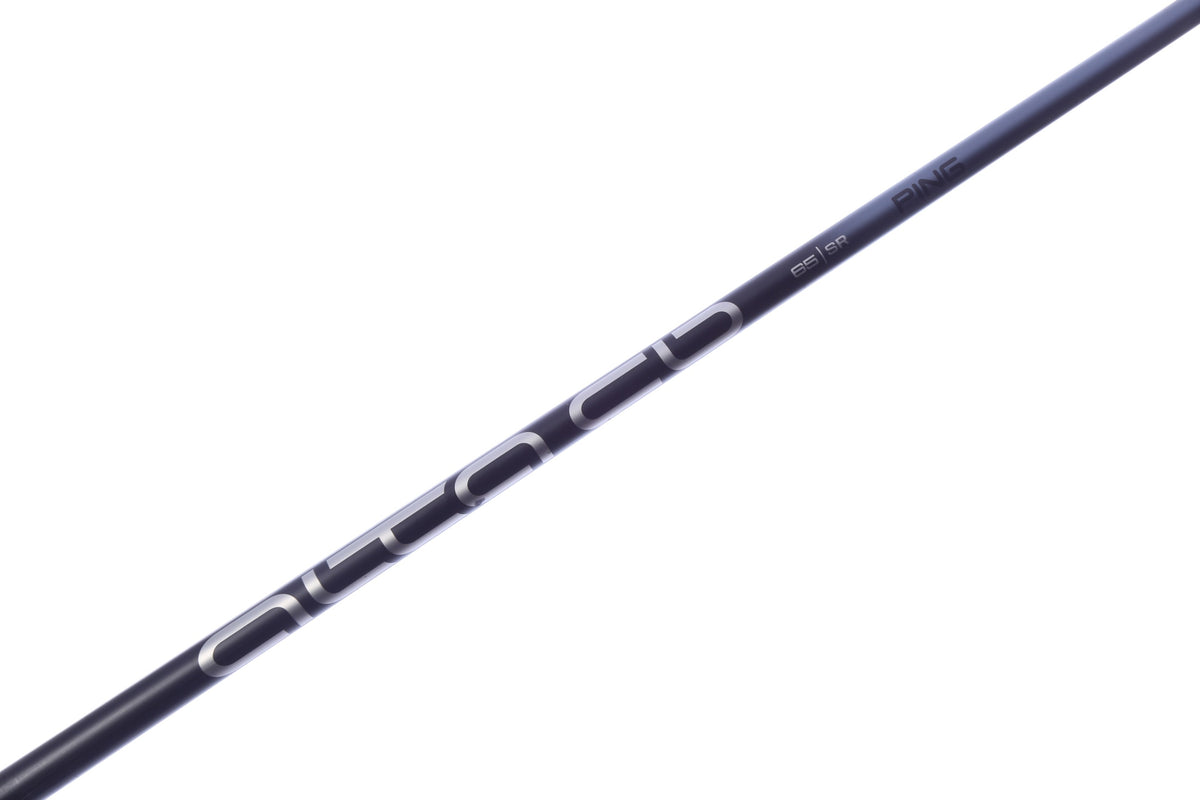
ALTA CB
The CB in ALTA CB stands for counterbalanced.
Counterbalancing moves more of the shaft’s mass toward the grip end of the club.
That can change how the club feels during the swing and can allow PING to create a longer or lighter-feeling club while maintaining an appropriate overall club balance.
The lighter-feeling club can influence timing, release, and how a golfer delivers the clubhead. For some golfers, that can produce a meaningful improvement.
PING ALTA CB
The Lineup
| Model | First Seen | Launch | Spin |
|---|---|---|---|
| ALTA CB Red | G410 era | Mid-High to High | Mid to Mid-High |
| ALTA CB Slate | G425 era | Mid-High | Mid |
| ALTA CB Black | G430 era | Mid to Mid-High | Mid |
| ALTA CB Blue | G440 era | Mid-High to High | Mid |
The Lineup…
ALTA CB Red
Mid-high to high launch, mid to mid-high spin. The most active, flexible-feeling profile of the four. First seen in the G410 era.
Best for: Moderate swing speeds that need maximum carry and easy lift off the tee.
ALTA CB Slate
Mid-high launch, mid spin. A balanced profile that blends lift with stability. First seen in the G425 era.
Best for: Smooth tempos that want an all-around shaft with predictable launch.
ALTA CB Black
Mid to mid-high launch, mid spin. Gives you height without letting spin climb. First seen in the G430 era.
Best for: Mid-to-slow swing speeds trying to optimize apex height without ballooning spin.
ALTA CB Blue
Mid-high to high launch, mid spin. Built around a lighter overall system for more ball speed. First seen in the G440 era.
Best for: Golfers chasing ball speed with a lighter build.
PING TOUR 2.0 CHROME or BLACK?
This is where the PING lineup gets particularly interesting.
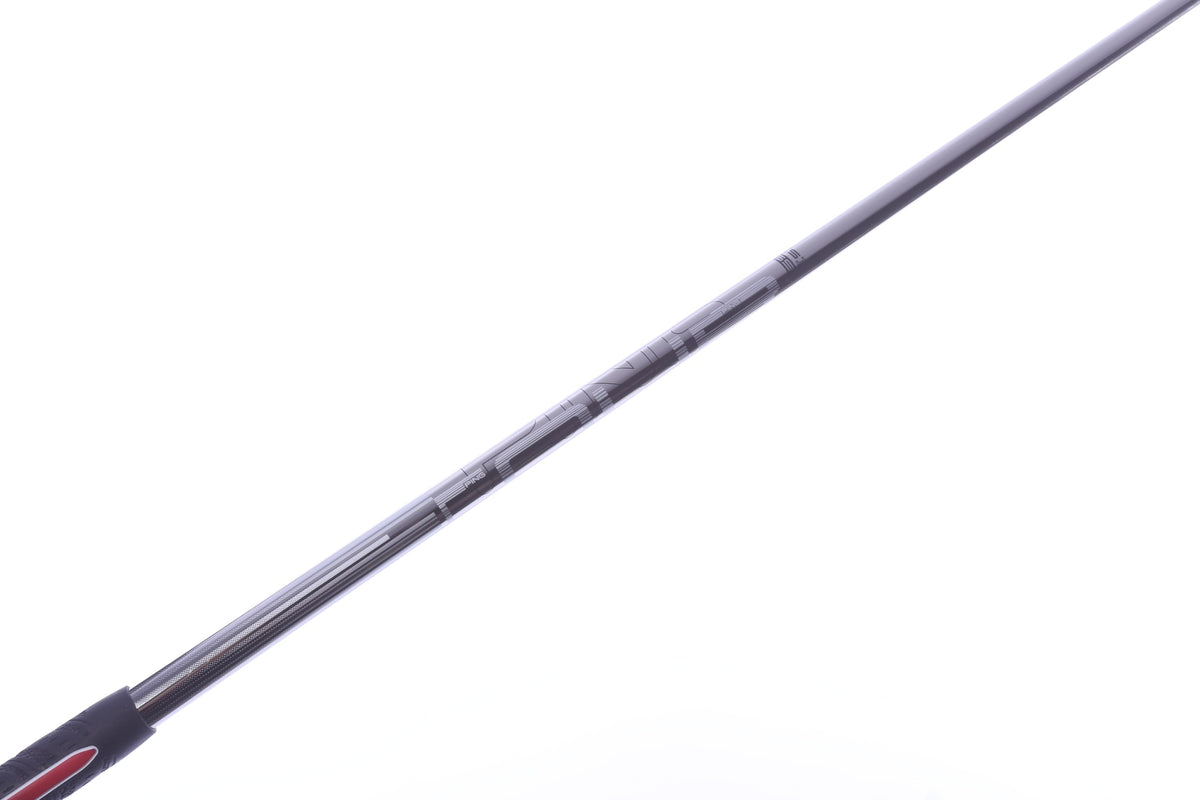
TOUR 2.0 CHROME
Low-mid to mid launch, built for control and precision. This is the more versatile option, available in different weights and flexes. In the G440 driver, the CHROME 65 comes in R, S and X, and the 75 adds weight without moving you to a different shaft family.
Best for: Golfers who want a controlled, mid-trajectory flight and room to fine-tune weight.
TOUR 2.0 BLACK
Low launch, low spin. It’s aimed at golfers who generate enough speed and delivery to take advantage of that profile.
Best for: Faster swingers wanting less spin and a lower flight. It isn’t a “good golfers only” shaft.
The Bottom Line
PING doesn’t simply make golf clubs and throw a generic shaft into the box.
PING has been developing proprietary shaft designs for decades, beginning with older TFC models and evolving through ALTA, PING TOUR, TOUR 173 and today’s TOUR 2.0 families.
And the company’s shaft-development capabilities have continued to expand.
So are PING shafts as good as aftermarket shafts?
They absolutely can be.
The ALTA CB might give you the feel and launch you’re missing.
The TOUR 2.0 CHROME might give you a better combination of stability and launch.
The TOUR 2.0 BLACK might give a high-speed player the lower launch and spin they’re looking for.
Or an aftermarket shaft might be the perfect answer.
The shaft doesn’t get better because it costs more.
It gets better when it works better for your swing.
That’s one of the reasons Independent Golf Reviews and Next Round Golf believe used shafts deserve much more attention.
Don’t shop for the most expensive shaft. Shop for the shaft that works.
And if you’re playing a PING club, don’t overlook the shaft that PING designed specifically for it.